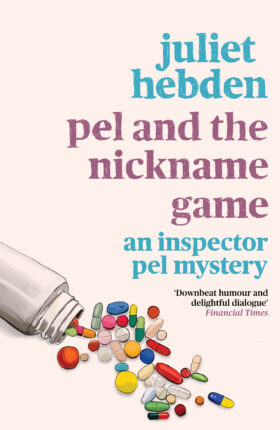
When five murders disturb his sleepy Burgundian city on Bastille night, Chief Inspector Evariste Clovis Désiré Pel has his work cut out for him. A terrorist group is at work and with the President due to make an official visit in a few weeks’ time, the pressure is on to uncover them and stop them in their tracks.
Meanwhile, Pel continues his courtship of the delightful Madame Faivre-Perret, and hopes one day to escape the tyranny of his TV-addicted landlady – but none of this distracts him from his goal of unmasking the murderers and stealing the would-be assassins’ power.
Moody, sharp-tongued and worrying constantly about his health, Inspector Pel ensures that no case goes unsolved, in these mordantly witty French mysteries.
When Chief Inspector Pel accepts a drinks invitation at the house of a big shot, Deputy Claude Barclay, he doesn’t realise how compromised he will become by his acceptance.
Brigade Criminelle is mobilised when a fatal stabbing, an anticipated delivery of lethal drugs from Marseilles, and the discovery of a thirty-year-old corpse in an ancient turreted tower in the town of Puyceldome coincide with a frantic search for two murderous hitchhikers – all on Chief Inspector Pel’s patch.
Brigade Criminelle is mobilised when a fatal stabbing, an anticipated delivery of lethal drugs from Marseilles, and the discovery of a thirty-year-old corpse in an ancient turreted tower in the town of Puyceldome coincide with a frantic search for two murderous hitchhikers – all on Chief Inspector Pel’s patch.
Murders circle around Burgundy where Pel has just been promoted to Chief Inspector, starting with the case of a woman whose body is found on the beach one morning. A death that appeared to be suicide at first glance turns out to have plenty of suspects, each with their own particular motive.
Pel’s personal life is going far from smoothly, as he discovers himself to be the target of a letter-bomb sent by an old enemy – aside from the obvious danger, this is yet another obstacle to his plans to marry Madame Faivre-Perret. Can Pel keep his life, his love and his career by solving the murder mysteries, and keeping the predators at bay?
Moody, sharp-tongued and worrying constantly about his health, Inspector Pel ensures that no case goes unsolved, in these mordantly witty French mysteries.
When Chief Inspector Pel accepts a drinks invitation at the house of a big shot, Deputy Claude Barclay, he doesn’t realise how compromised he will become by his acceptance.
Brigade Criminelle is mobilised when a fatal stabbing, an anticipated delivery of lethal drugs from Marseilles, and the discovery of a thirty-year-old corpse in an ancient turreted tower in the town of Puyceldome coincide with a frantic search for two murderous hitchhikers – all on Chief Inspector Pel’s patch.
Brigade Criminelle is mobilised when a fatal stabbing, an anticipated delivery of lethal drugs from Marseilles, and the discovery of a thirty-year-old corpse in an ancient turreted tower in the town of Puyceldome coincide with a frantic search for two murderous hitchhikers – all on Chief Inspector Pel’s patch.
Irritable, dyspeptic Inspector Evariste Clovis Désiré Pel did not need another murder case added to his already Herculean workload, especially not this ghoulish business of a mutilated, headless corpse, the anonymous victim of a desperate and determined killer. Yet, if the murder was so deliberate, so well-planned, why was the identity of the dead man obscured?
Pel’s investigation moves from Burgundy to the frontier and back again, stirring echoes of the horror and trauma of the War – and meeting a blank wall of non-cooperation so far as the murder is concerned. The trail is muddied by mistaken identities and ancient grievances, driving the chain-smoking Inspector close to distraction. Until, amid the cloud of acrid Gauloise smoke, Pel sees a ray of enlightenment and closes in with his inimitable savoir faire.
Moody, sharp-tongued and worrying constantly about his health, Inspector Pel ensures that no case goes unsolved, in these mordantly witty French mysteries.
When Chief Inspector Pel accepts a drinks invitation at the house of a big shot, Deputy Claude Barclay, he doesn’t realise how compromised he will become by his acceptance.
Brigade Criminelle is mobilised when a fatal stabbing, an anticipated delivery of lethal drugs from Marseilles, and the discovery of a thirty-year-old corpse in an ancient turreted tower in the town of Puyceldome coincide with a frantic search for two murderous hitchhikers – all on Chief Inspector Pel’s patch.
Brigade Criminelle is mobilised when a fatal stabbing, an anticipated delivery of lethal drugs from Marseilles, and the discovery of a thirty-year-old corpse in an ancient turreted tower in the town of Puyceldome coincide with a frantic search for two murderous hitchhikers – all on Chief Inspector Pel’s patch.
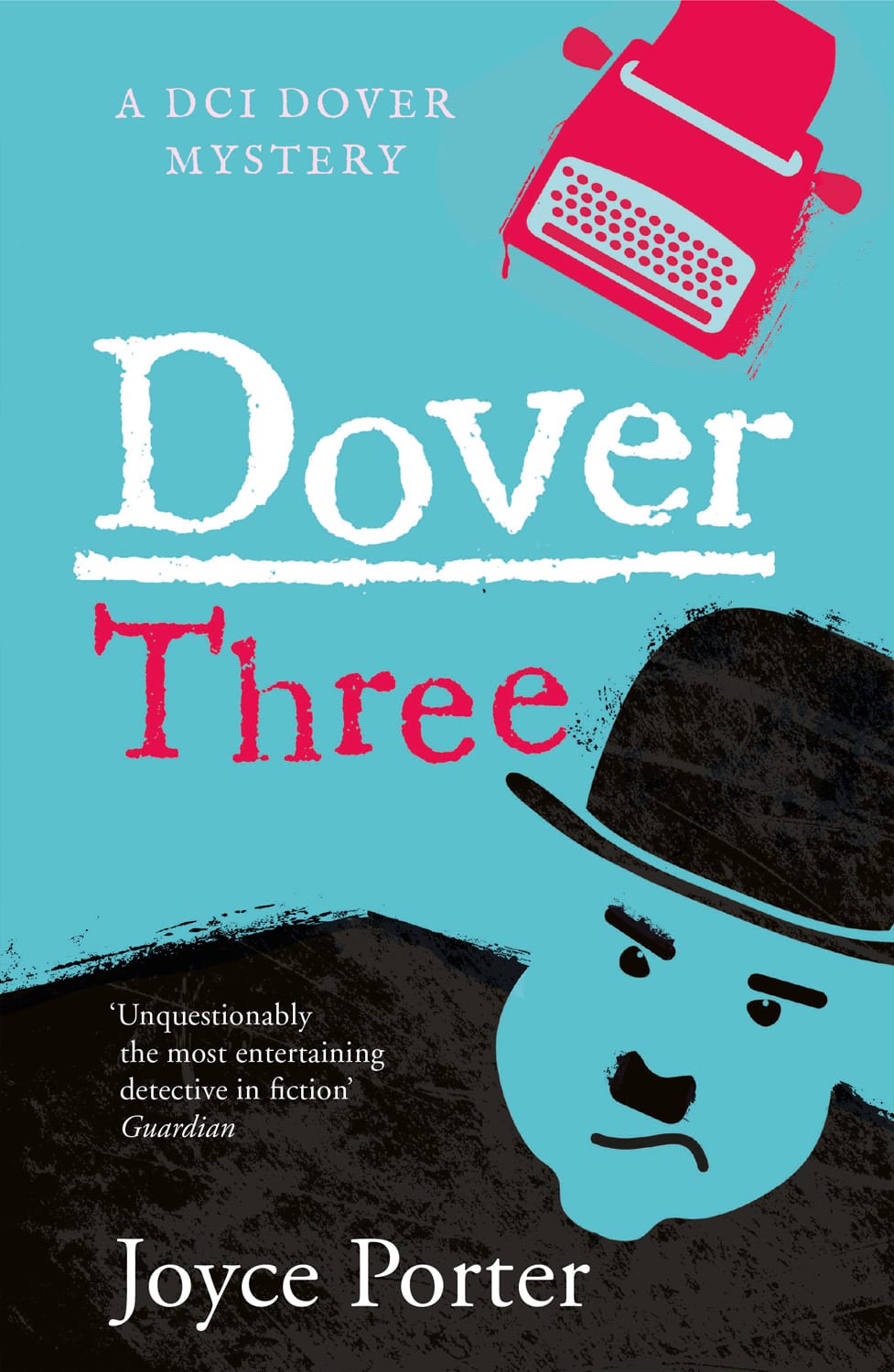
Detective Chief Inspector Wilfred Dover is the most idle and avaricious hero in all of crime fiction. Why should he even be bothered to solve the case?
One February evening in northern England, a young woman is shot in the head and left in a coma. Eight months later she dies, thus becoming a welcome excuse to dispatch the odious Inspector Dover as far as possible from London.
It soon appears that Isobel Slatcher could have been smothered in her hospital bed with a pillow. Now Dover may have two murderers to catch: one who pulled the trigger, the other the last visitor she had in her short lifetime.
If, that is, the town’s warring Catholics and Protestants will only stop distracting him.
When an autopsy reveals a peculiar clue, DCI Dover and his ever-unwilling assistant MacGregor set off on a trail that leads them to a squalid seaside resort.
Detective Chief Inspector Wilfred Dover is the most idle and avaricious hero in all of crime fiction. Why should he even be bothered to solve the case?
Detective Chief Inspector Wilfred Dover is the most idle and avaricious hero in all of crime fiction. Why should he even be bothered to solve the case?
Detective Chief Inspector Wilfred Dover is the most idle and avaricious hero in all of crime fiction. Why should he even be bothered to solve the case?
It seemed that everyone in the bleak little village of Thornwich had been honoured with the most obscene poison pen letters imaginable. And they showed no signs of letting up. So off goes Chief Inspector Dover of Scotland Yard, his unfortunate young colleague MacGregor in tow, to track down the source.
Not-so-comfortably ensconced in the miserable lodgings of the Jolly Sailor, Dover’s easy confidence is shaken when he suddenly has to deal with two suicides – one attempted, the other all-too-successful – black-market babies, and various bowel disorders.
When the second suicide begins to look more like murder, however, it is only a matter of time before Dover comes face-to-face with a most determined, and totally unlikely killer.
When an autopsy reveals a peculiar clue, DCI Dover and his ever-unwilling assistant MacGregor set off on a trail that leads them to a squalid seaside resort.
Detective Chief Inspector Wilfred Dover is the most idle and avaricious hero in all of crime fiction. Why should he even be bothered to solve the case?
Detective Chief Inspector Wilfred Dover is the most idle and avaricious hero in all of crime fiction. Why should he even be bothered to solve the case?
Detective Chief Inspector Wilfred Dover is the most idle and avaricious hero in all of crime fiction. Why should he even be bothered to solve the case?
Though there’s every cause to assume that she has been murdered – she gave her favours freely and may even have stooped to a bit of blackmail – no body is to be found. Weighing in at sixteen stone, she couldn’t be hard to overlook.
But where is she? And why should Dover, of all people, be called upon to find her? Or, for that matter, even bother to solve the damned case?
When an autopsy reveals a peculiar clue, DCI Dover and his ever-unwilling assistant MacGregor set off on a trail that leads them to a squalid seaside resort.
Detective Chief Inspector Wilfred Dover is the most idle and avaricious hero in all of crime fiction. Why should he even be bothered to solve the case?
Detective Chief Inspector Wilfred Dover is the most idle and avaricious hero in all of crime fiction. Why should he even be bothered to solve the case?
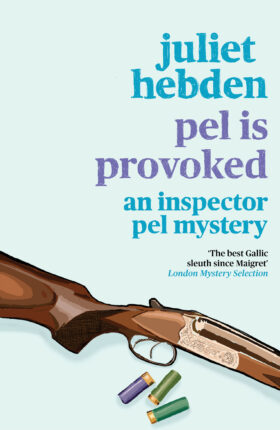
Deep in the Burgundy countryside, a murder case is perplexing Inspector Pel. The body was found in the salon, an elegant room with a grand piano and a Louis XIV escritoire. The shutters were still closed and the dead end of a record of Rigoletto was still turning.
There are some obvious suspects, yet the clothes of none of them show any signs of blood. And what were the tensions that must have torn at this family? It’s only when a second murder takes place that the method of the first becomes startlingly clear.
Moody, sharp-tongued and worrying constantly about his health, Inspector Evariste Clovis Désiré Pel ensures that no case goes unsolved, in these mordantly witty French mysteries.
When Chief Inspector Pel accepts a drinks invitation at the house of a big shot, Deputy Claude Barclay, he doesn’t realise how compromised he will become by his acceptance.
Brigade Criminelle is mobilised when a fatal stabbing, an anticipated delivery of lethal drugs from Marseilles, and the discovery of a thirty-year-old corpse in an ancient turreted tower in the town of Puyceldome coincide with a frantic search for two murderous hitchhikers – all on Chief Inspector Pel’s patch.
Brigade Criminelle is mobilised when a fatal stabbing, an anticipated delivery of lethal drugs from Marseilles, and the discovery of a thirty-year-old corpse in an ancient turreted tower in the town of Puyceldome coincide with a frantic search for two murderous hitchhikers – all on Chief Inspector Pel’s patch.
The classic fictional memoirs of a hapless schoolmaster.
There is chalk in his fingernails and paper darts fill the air as A. J. Wentworth, mathematics master at Burgrove Preparatory School, unwittingly opens the doors that lead not to knowledge but to chaos and confusion.
In his collected papers he sets out the truth about the fishing incident in the boot room, the real story about the theft of the headmaster’s potted plant, and even the answer to the sensitive question of whether or not Mr Wentworth was trying to have carnal knowledge of matron on that one, memorable occasion.
A comic study in blinkered English manners, the Wentworth Papers will delight fans of P. G. Wodehouse or Grossmiths’ Mr Pooter. First introduced to readers in the pages of Punch magazine, it was later dramatized for both BBC Radio and iTV drama.
The second of the humorous fictional memoirs of a hapless schoolmaster.
A. J. Wentworth, formerly teacher of mathematics at Burgrove prep school for boys, now passes his retirement years in a typically English rural village where somehow he seems unable to stay out of trouble.
Wentworth lurches from mishap to misunderstanding, whether at the Conservative Association or the local dramatic society, the cricket club dinner or the vicarage Christmas Party. His pièce de résistance proves to be the escorting of two schoolboys on a trip to Switzerland that unexpectedly detours into Italy.
A comic study in blinkered English manners, the Wentworth Papers will delight fans of P.G. Wodehouse or Grossmiths’ Mr Pooter. First introduced to readers in the pages of Punch magazine, it was later dramatized for both BBC Radio and ITV drama.
The last of the humorous fictional memoirs of a hapless assistant schoolmaster.
It is to be A.J. Wentworth’s final appearance on the scholastic scene. Once more he dons his cap and gown – or, to be more precise, Rawlinson’s cap and gown – and returns to Burgrove for just one more time.
His final term includes a brief but broadening visit to the United States, in addition to the usual intellectual cut and thrust of the classroom. Whether he’s causing a stir on Fifth Avenue, or merely ‘trying to knock a bit of sense into a bunch of thick-headed boys,’ A.J. Wentworth fumbles, blusters and generally carries on.
A comic study in blinkered English manners, the Wentworth Papers will delight fans of P.G. Wodehouse or Grossmiths’ Mr Pooter. First introduced to readers in the pages of Punch magazine, it was later dramatized for both BBC Radio and ITV drama.
Enter your email address in the field below to email the ebook(s) first to yourself.
Click on Email Ebook(s).
From your own email account, forward the email to the recipient with your own personal message added.
Note that Farrago books are purchasable either as a one-time gift OR for reading by yourself. Ebooks from the Farrago website are watermarked and must not be shared or uploaded to websites or file-sharing networks (here are our full terms and conditions).
Read on a desktop computer
On a typical computer running Windows, you first need to install an ebook-reading program, such as Adobe Digital Editions. On a Mac, epub files can be downloaded and opened in iBooks.
Click on the ‘epub format’ of your purchased ebook(s) to download it. Or press Download Ebook(s) to download a .zip file which you then need to unzip before proceeding.
In your Downloads folder locate and open the ebook, which will have a file name ending ‘.epub’.
The ebook may open automatically if you have installed Adobe Digital Editions or are on a Mac. If necessary, go to your ebook-reading program to open the ebook.
Transfer to your Nook/Kobo/other device
On a computer, first click on the ‘epub format’ of your purchased ebook(s) to download it. Or press Download Ebook(s) to download a .zip file which you then need to unzip before proceeding.
Connect your device to your computer with a USB cable.
On your computer open your Downloads folder and locate the ebook file, ending in ‘.epub’.
Drag or copy the ebook to your device’s documents folder (for Nook users: in your file explorer look for a new device on the left called something like MyNookColor. Inside MyNookColor there should be a My Files -> Books folder: drag or copy the file there)
Disconnect your device, and the book should be on your device’s home screen.
Send to your Kindle or Kindle app
You need already to have an Amazon account.
Find out your Send-to-Kindle email address. It’s usually yourname@kindle.com, and can be found on Amazon under Manage Your Content > Preferences > Personal Document Setting.
On the same Amazon page, also make sure you authorize the noreply@farragobooks.com email address to send the ebook(s) from.
On the Farrago page, enter your Send-to-Kindle address in the email field, and press Email Ebook(s).
The ebook(s) will then appear on your Kindle device (or Kindle app) after a few minutes, assuming the device is connected to wifi.
Sideload to your Kindle
You need already to have an Amazon account.
On a computer, first click on your purchased ebook(s) to download it. Or press Download Ebook(s) to download a .zip file which you then need to unzip before proceeding.
Connect your Kindle device to your computer with a USB cable.
On your computer open your Downloads folder and locate the ebook file.
Drag or copy the ebook to your Kindle's documents folder (in your file explorer look for a new device on the left called something like SDCARD. Inside SDCARD there should be a My Files or My Documents folder: drag or copy the file there)
Disconnect your device, and the book should be on your Kindle device’s home screen.



















Drop us a line
Follow us on Twitter
Like us on Facebook